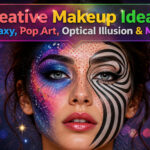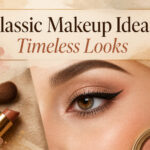
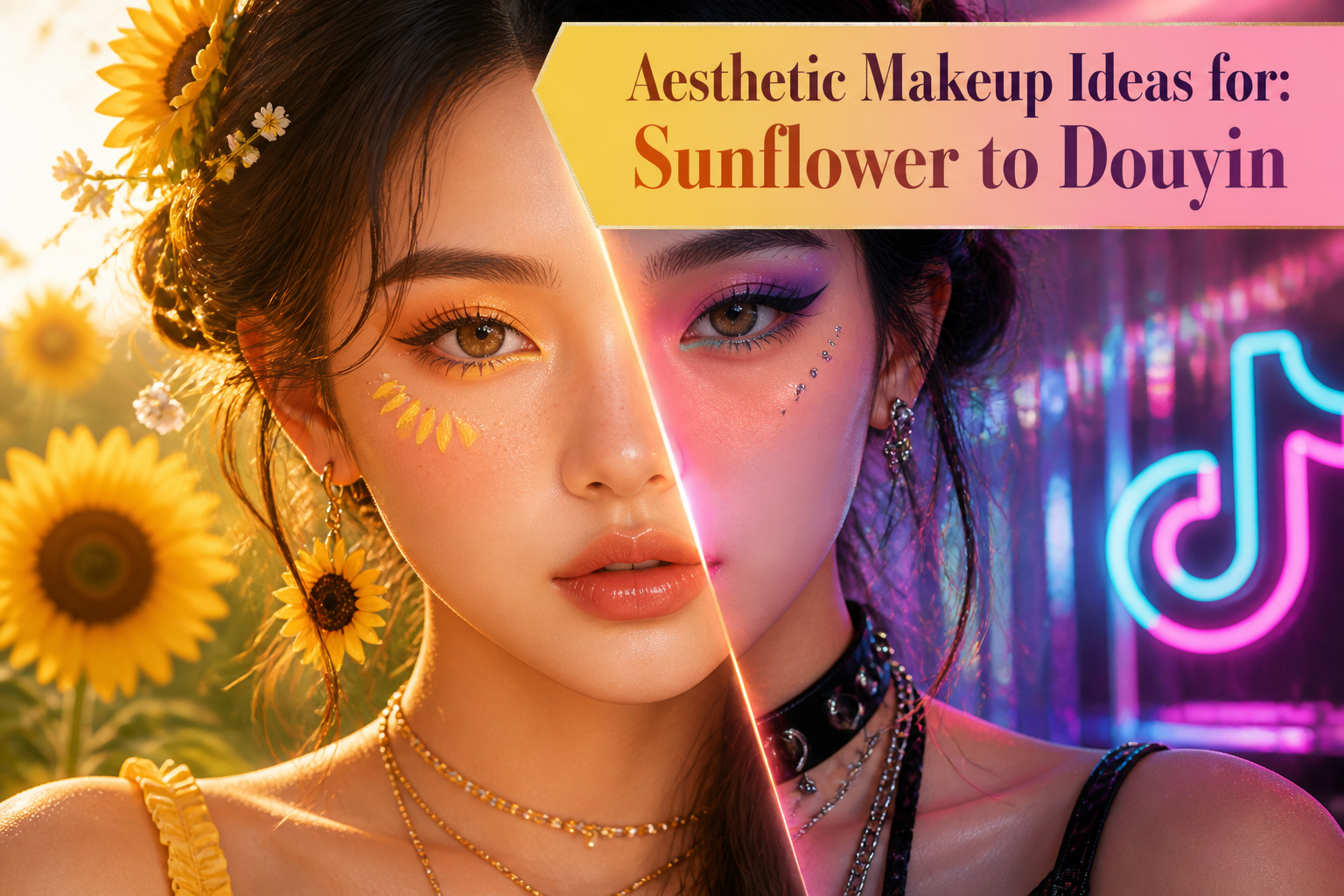
The fifteen looks below run from a ten-minute clean girl base to avant-garde resin attachments you cannot sit through dinner in. What separates the ones you will actually wear from the ones that stay on your screen is whether the technique survives bathroom light at arm’s length, not just ring light at selfie distance. Patrick Ta’s blush method and L’Oréal’s pale yellow Chill shadow both pass that test; the white nose dot from Douyin tutorials and the full Bratz contour do not.
1. Sunflower Aesthetic Makeup
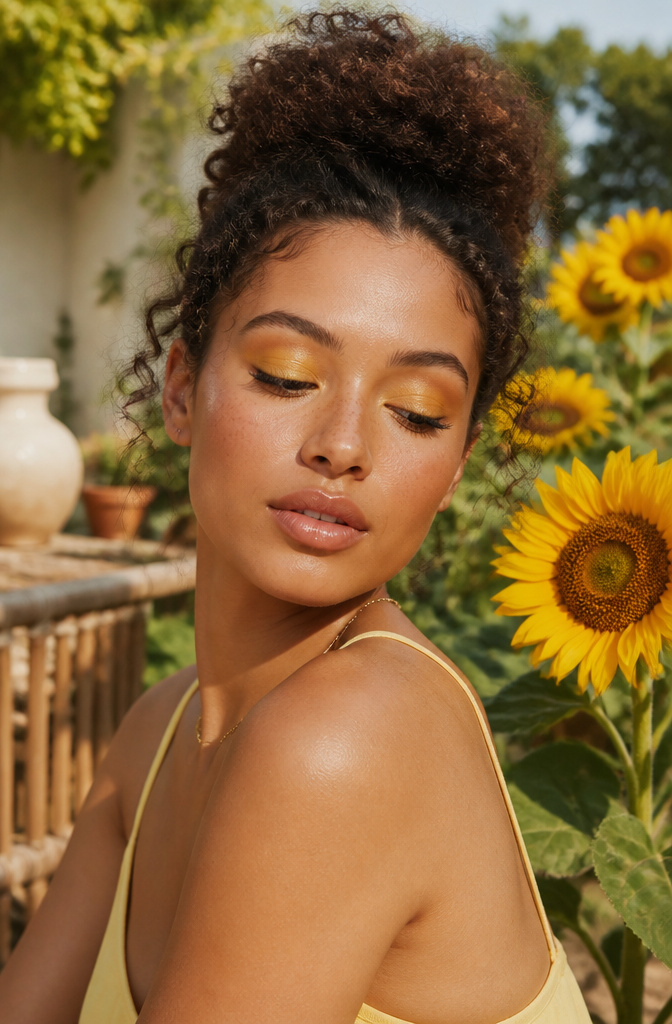
Yellow eye makeup reads louder on camera than in a mirror, which is half the reason the sunflower aesthetic took off. The guides all start with a pale yellow base, and the one that actually earns shelf space in my bathroom is L’Oréal Paris Colour Riche Monos Eyeshadow in Matte Chill. It is a true pale yellow without the chalkiness that turns jaundiced on olive skin, which matters because sunflower tones shift hard against cool undertones. On warm or neutral complexions, the same shade opens the eye; on cooler skin, the brown transition shade becomes non-negotiable to keep the look intentional rather than sickly.
Most tutorials layer Eternal Sunshine into the crease, a deeper golden yellow. The effect is pretty but reads costume at 9 a.m. For daylight, Matte Chill across the lid with a soft brown blown through the socket wins. I skip the white inner-corner highlight the guides suggest; on my skin it photographs as stark, and the yellow alone does enough lifting. The lower lash line is where I break my own rule and run the gold underneath, but lightly, with a small brush, because smeared yellow under-eye is not the vibe.
2. Peachy Aesthetic Makeup
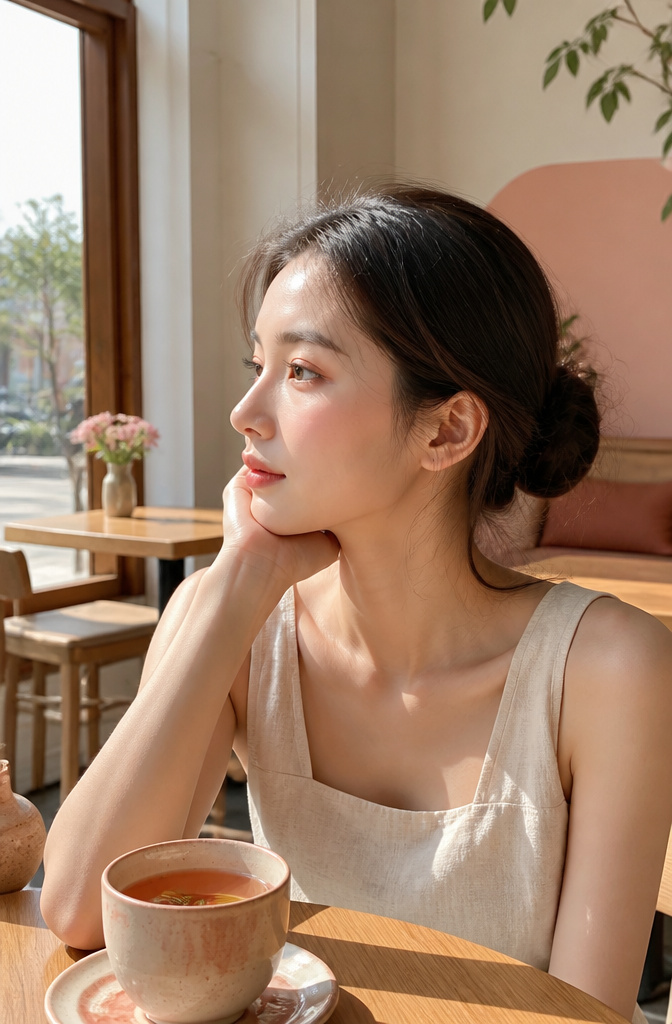
Peach reads warm on some skin and turns traffic-cone orange on others by lunch. The ones that stick around on me lean pink in the base, not yellow. Tower 28 Beach Please tints pull this off, and Sisley Le Phyto Blush does too. Both are cream formulas, which matters because powders in this shade family oxidize faster.
For the full monochrome wash, the same tone goes across eyes, cheeks, and lips. Start with a foundation that stays neutral, or the whole thing skews. L’Oréal Paris Infallible Up to 24HR Fresh Wear Foundation works here. It gives the peach something stable to sit on rather than letting skin chemistry shift it warmer through the day.
On cheeks, L’Oréal Paris Paradise Enchanted Fruit-Scented Blush in Just Curious or True Match Blush in Barely Blushing are the options that keep the color honest. I would skip the fruit-scented one if you are sensitive to fragrance, but the pigment behaves the same in both.
3. Grunge Aesthetic Makeup
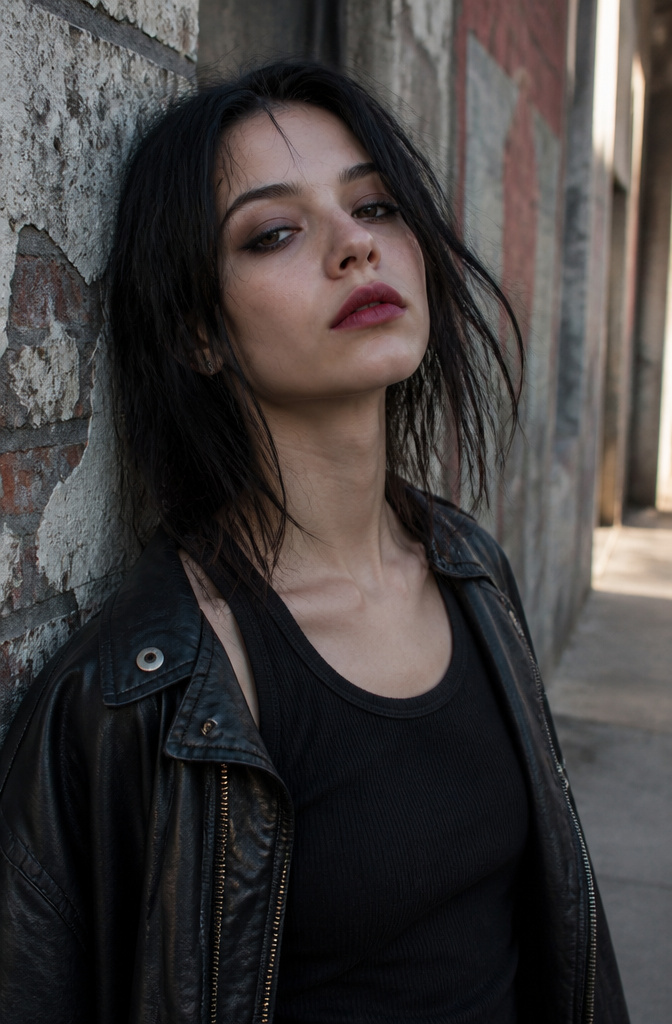
Grunge makeup lives or dies on the edge between slept-in and sloppy, and the difference is almost entirely blending. The first time I tried a charcoal rim I looked like I’d rubbed my eyes during allergy season; the third time, the taupe had melted into something that read as intentional. The shadow smudge brush is the tool that gets you there, working liner and pigment together until the edge softens rather than stops. Darker colors demand this more, not less: a hard line in charcoal looks like a mistake, but the same color diffused reads as mood. Vampy lips pair well if you keep the boundary blurred, a brownish liner one shade lighter than the lip color to build dimension without a drawn-on perimeter. The lived-in finish comes from stopping before everything is perfect: one smudge left alone, one lower lash line heavier than the other. Stop when it looks like you might have slept in it, not like you forgot to wash your face.
4. Fairycore Makeup
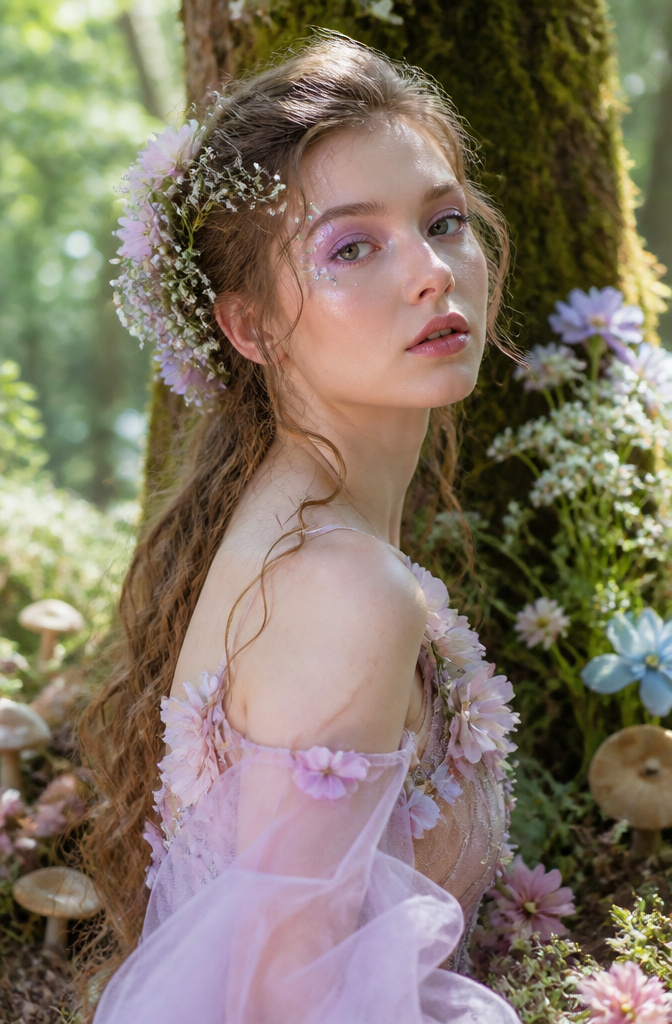
Pearlescent finishes and soft pastels read beautifully in still photographs, but the real test is what happens when you actually move your face. Watercolor washes across the eyes and temples, done with muted colors and no hard edge to maintain, transfer well because smudges look intentional. That soft blur is the point. Small gems and drawn-on freckles are where the trouble starts. Faux freckles, especially metallic ones, shift under office lighting in ways that look charming on a screen and patchy in person. Rhinestones and pearls at the brow or cheekbone catch light differently when your head turns than when it is frozen front-facing for a camera. If you want the full fairycore effect for an evening, the adhesive matters more than the gem itself, and placement along the temple rather than the mobile eyelid survives actual blinking. For morning, multicolored pastel shadow without the extras gives the fantasy without the maintenance. The watercolor approach, letting the brush lead rather than forcing a shape, works in both worlds because imperfection is built into the finish.
5. E-Girl Makeup
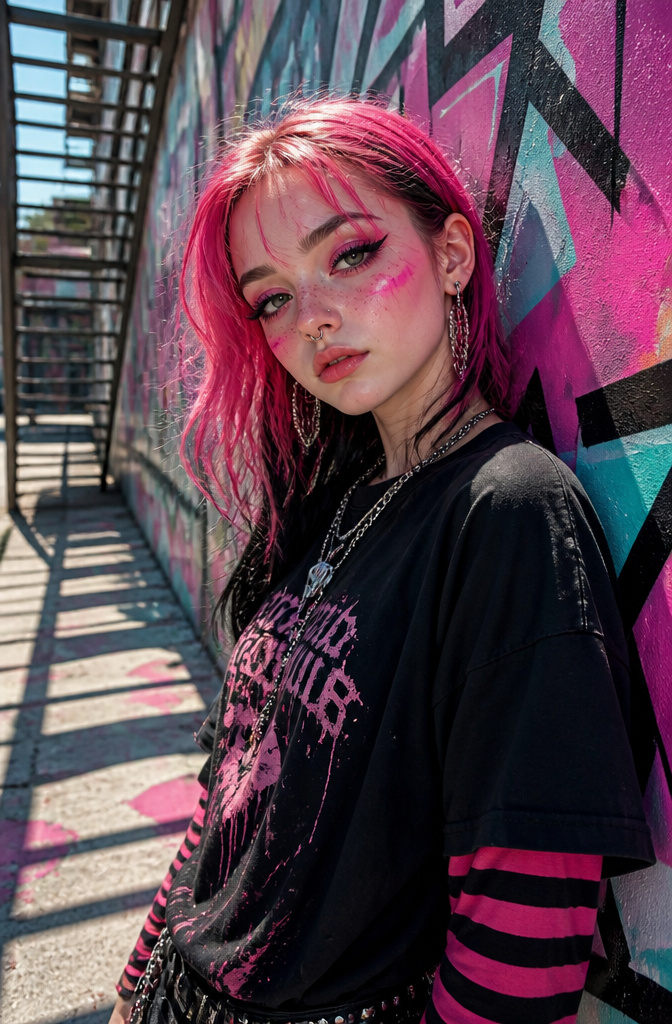
The E-girl look lives or dies by what stays on your face past lunch. Patrick Ta’s Crème & Powder Blush in She’s That Girl builds with a natural enough finish that it reads as real flush rather than costume, which matters when you’re adding drawn hearts or under-eye stripes on top. Face paints that dry down to a powder finish shift less than creamy sticks; the emo-meets-playful punk vibe only works if your cross decal hasn’t migrated to your jawline by 2 PM.
Vibrant hair colors frame the whole thing, but the hair is someone else’s problem. What sources describe as "classic symbols" of the style, the cat eyes and artsy decorations, need a base that grips. Layering a pigment-dense blush over a set cream paint gives the design something to adhere to without the cracking that comes from building too many wet layers.
Monochromatic brightening, same shade across cheeks-nose-eyes, keeps the internet-native chaos from looking accidental. Patrick Ta’s method of adjusting tools rather than diluting pigment applies doubly here: a fluffy brush softens the stripe to a suggestion, a dense one leaves it graphic. The look is youthful by definition. The trick is making it survive until you are done being photographed.
6. Soft Glam Makeup
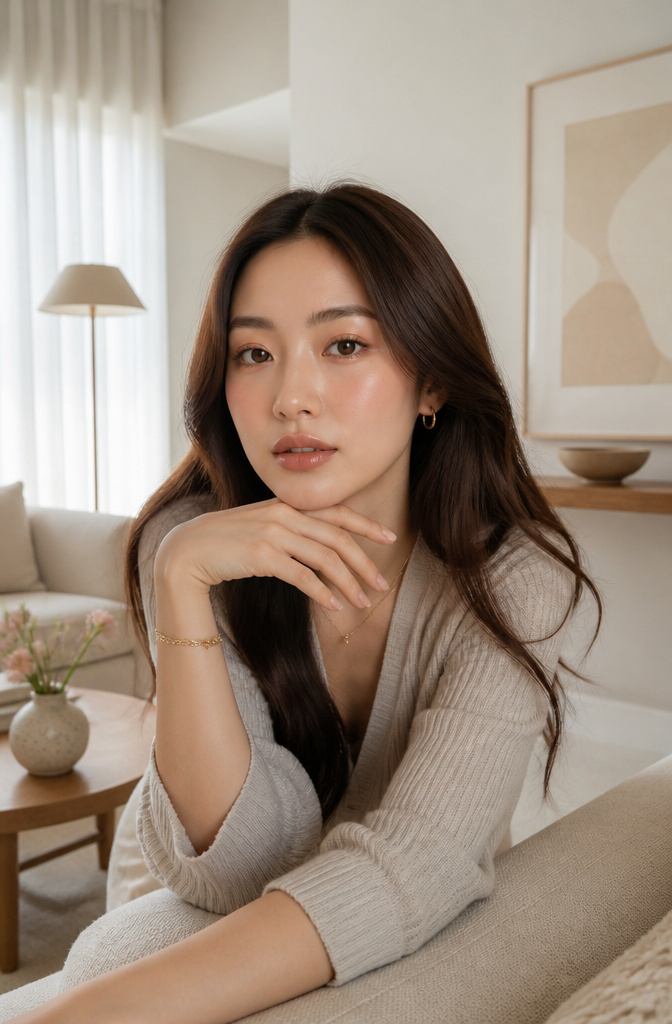
Soft glam lands on the widest range of faces without asking anyone to reinvent their routine. The look builds from warm-toned blush in dusty pink, swept over the apples of the cheeks, paired with soft colors and subtle contouring that keeps the structure gentle rather than architectural. Minimalistic eye makeup with a natural glow finishes it, so the skin reads as the feature, not the product.
Medium coverage foundations like L’Oréal Paris True Match Super Blendable Makeup match tone and texture without masking it, which matters more here than in heavier aesthetics. My own cheekbones sit low and flat, so most contour tutorials leave me with two muddy stripes and confusion. What actually works is a matte bronzer swept slightly below the natural hollow, blended upward toward the temple rather than inward toward the nose. The light catches the high point of the cheek anyway, and the shadow reads as bone structure without claiming to be. Skip shimmer on the contour; save it for a small tap at the inner corner of the eye or the center of the lid if you want the glow the look is named for.
7. Gothic Makeup
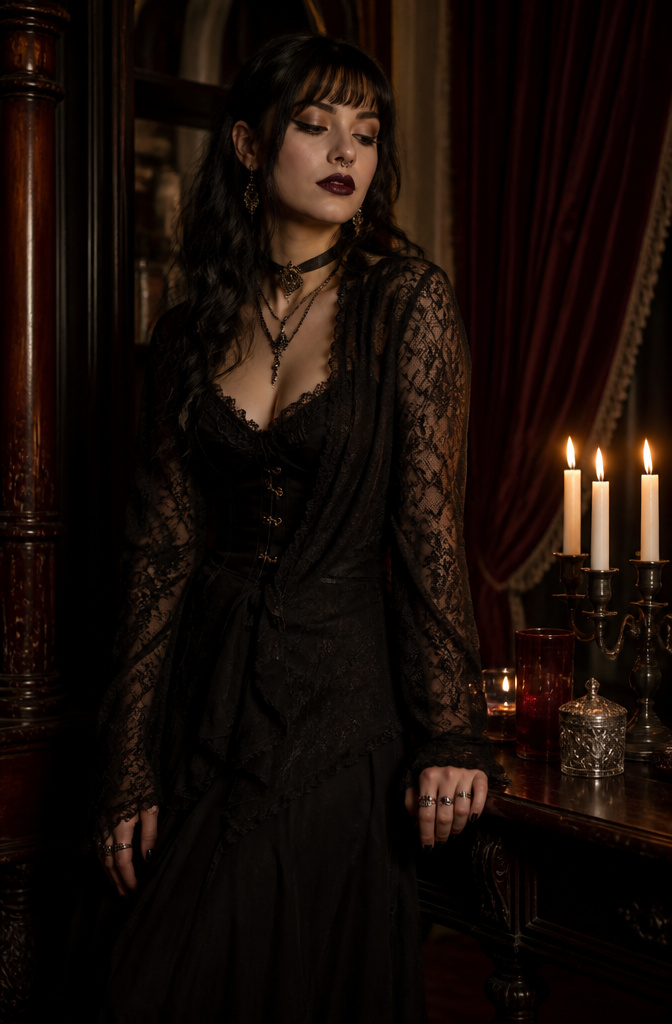
Deep lip colors anchor the Gothic look, and the range runs from true black through burgundy to deep plum. The sources agree on that much, but they split on what else earns the label. One camp insists on the full architecture: gel pencil liner drawn sharp, brows carved into clean edges, false lashes stacked thick, and eyeshadow kept to black, gray, and deep purple. The other reads broader, allowing dark shadows and vampy lips to stand alone with contoured cheekbones. The difference matters if you are getting ready at 7 a.m. and need to know whether the look survives without its full kit.
Feathering is the risk with these shades, and not all formulas stay put. The sources do not name which ones fail, but the gel pencil liner they recommend for eyes suggests a similar approach for lips: a waxy, set formula over something creamy that migrates. What I can confirm from the reading is that a lip liner base is standard advice, though even that does not save every formula. The ones that hold without feathering tend to be the matte, densely pigmented bullets that drag slightly on application, not the liquid stains that set too rigid or the balms that never set at all.
For the subway application, the same matte bullets win. You can feel the edge stay where you place it, no mirror required, because the color deposits in one pass and does not shift as you press your lips together. The deep plums are most forgiving here, black the least.
8. Clean Girl Makeup
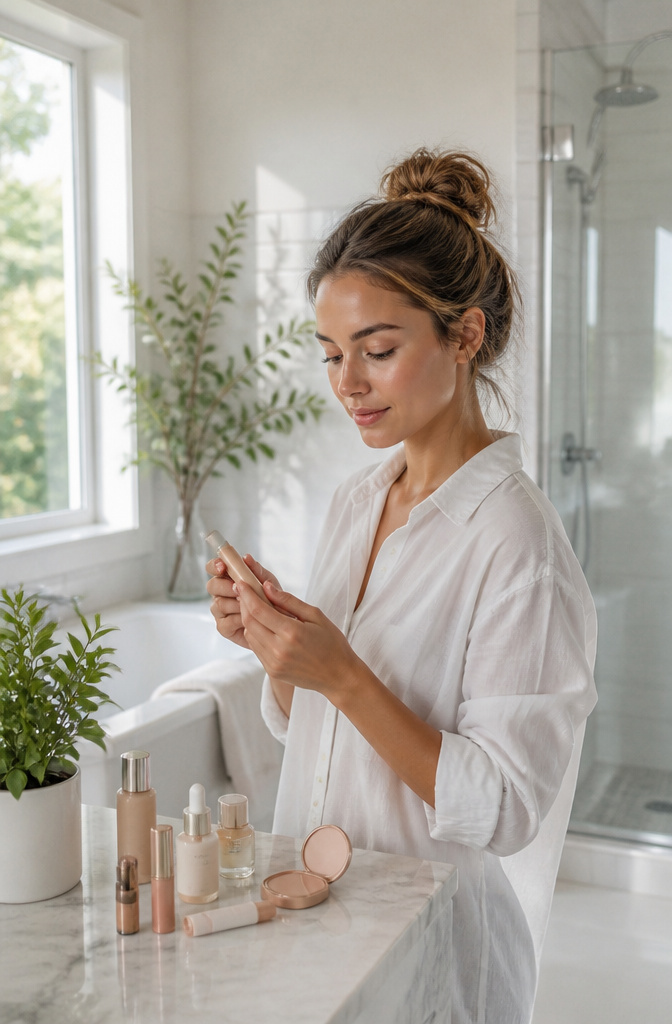
The clean girl look started as a direct answer to the heavy contour and Instagram baking that dominated the 2010s, and it is still the baseline most other 2026 aesthetics build from. Dewy skin and brushed-up brows are the whole statement, so the products matter more than the steps.
Skin prep does the actual work. Emily Cheng, the makeup artist behind a lot of the looks you have seen on Indya Moore, starts with a gentle exfoliant to smooth dry patches, then moisturizes before touching any foundation. On combination skin, the dewy finish is where things go wrong by mid-afternoon. Monika Blunder’s Blunder Cover and Shiseido Synchro Skin are the two foundations Cheng reaches for; in my reading, neither is marketed specifically for oily zones, so the glow can read as grease by 4 PM if your T-zone produces its own shine. A highlighter balm on the high points only, like Pat McGrath’s, keeps the radiance where you placed it instead of letting it migrate.
Brows are the other half. Cheng fills sparse areas with hairlike strokes using a sharp pencil, Kosas Brow Pop, then locks the shape with gel. Glossier’s Brow Flick adds realistic strokes where the brow is thin. I have spent time comparing brow soap against brow gel for the lifted, fluffy effect: soap gives more structure and that laminated look, but it can flake by late afternoon. Benefit 24 Hour Brow Setter is the gel Cheng uses on set, and the hold lasts without the residue soap sometimes leaves. If you are doing this in ten minutes, the brow is where to spend them; everything else stays minimal.
9. Latte Makeup
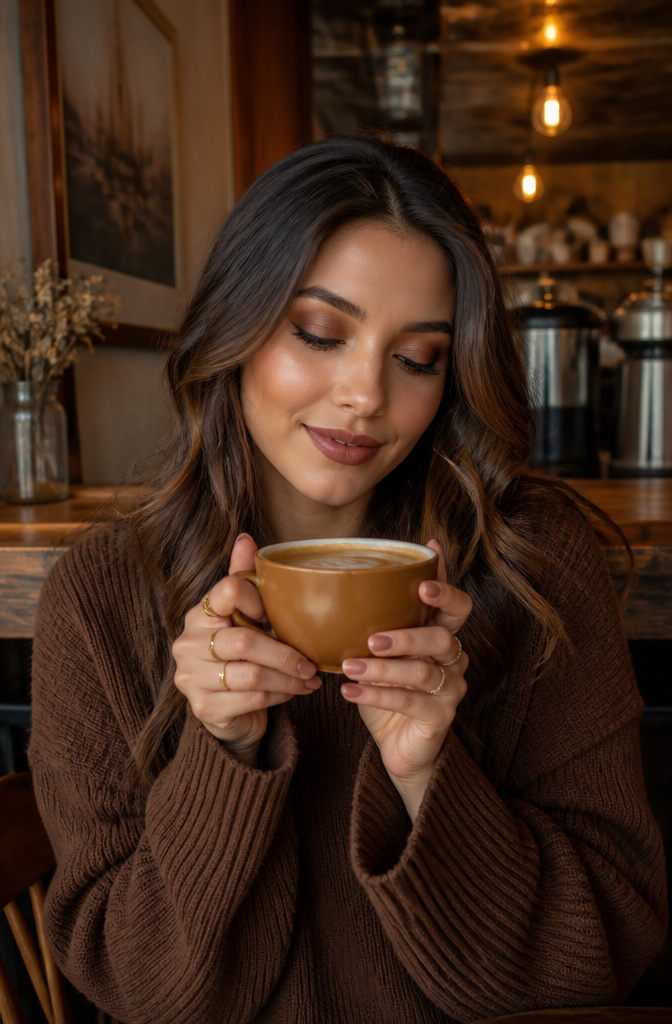
Latte makeup sounds like the kind of soft, wearable brown you sip on a Sunday morning, but the version taking over aesthetic feeds right now is much more deliberate than that. Think espresso depths blended into warm, dimensional browns that actually register as pigment on skin rather than disappearing into a muddy haze.
The real problem with this trend is how many brown palettes look rich in the pan and turn ashy the moment they hit deeper skin tones. Warmth matters more than darkness here. A chocolate shadow with red or orange undertones will read as depth, while a cool brown, even a dark one, can flatten and gray out on melanin-rich complexions. Always test on your forearm, not your wrist; the undertone difference is stark enough that a shadow that looks promising near your palm can read completely different at mid-arm.
Application technique leans into contrast rather than wash. Layer a deeper matte brown through the outer third and crease, then press a shimmery warm bronze onto the lid with a finger rather than a brush. The finger deposits more pigment and kills the muddiness that happens when shimmer blends too far into matte territory. Skip the waterline liner; this look needs the eye to stay open and rounded, and a dark rim closes it. A brown pencil smudged into the upper lashes gives the definition without the shrink.
10. Vintage Makeup
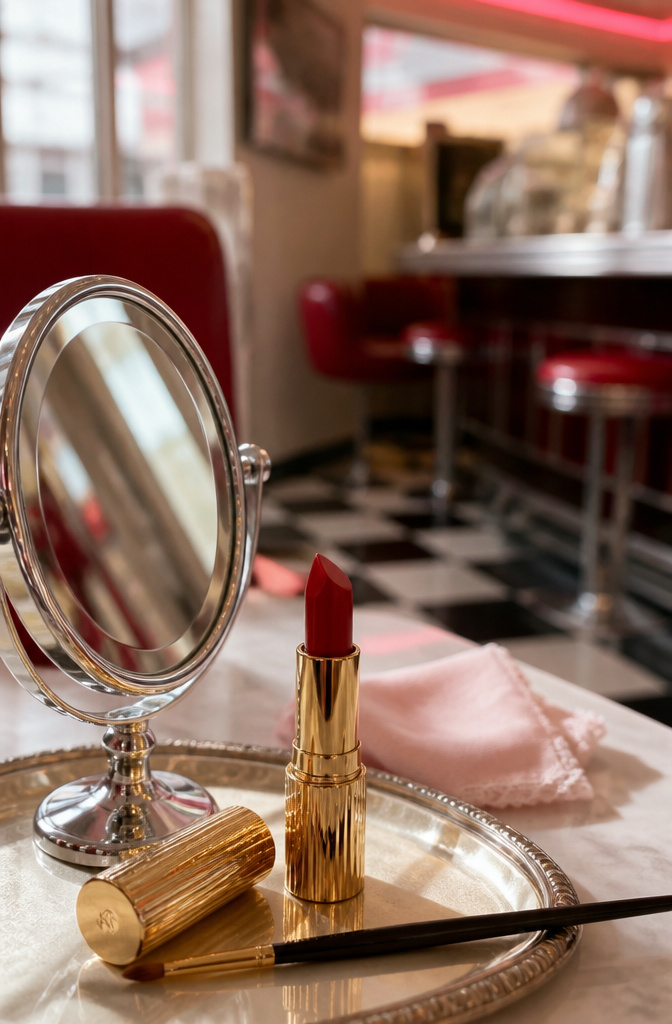
Vintage makeup starts with choosing which decade your features can actually service. The 1950s winged liner and red lip tint work on most faces because the drama sits at the outer eye and mouth, places that read the same across bone structures. A sharp cat-eye paired with a flawless matte complexion pulls the eye horizontally, which flatters rounder faces especially; the trick is keeping the wing low rather than swept upward, where hooded lids disappear it entirely.
The 1920s thin brow and matte skin ask more of you. That boyish, flattened look depends on visible lid space between brow and lash line, plus a certain face length to carry the downward lip. On shorter faces or eyes set deeper, the thin brow just looks sparse, not period-intentional. Matte complexion aside, modern skin prep differs enough that the finish turns chalky without the heavy creams they used then.
1970s styling lands easier for everyday wear: a single pigmented shadow across the lid, no liner required unless you want the extra vintage edge. Lily Collins loaded it on at the 2019 Met Gala and it read immediately as throwback rather than sloppy. The restraint is the point. What fails is pairing it with over-teased hair; twice a week of that volume is plenty before it shifts from reference to costume.
11. Douyin Makeup
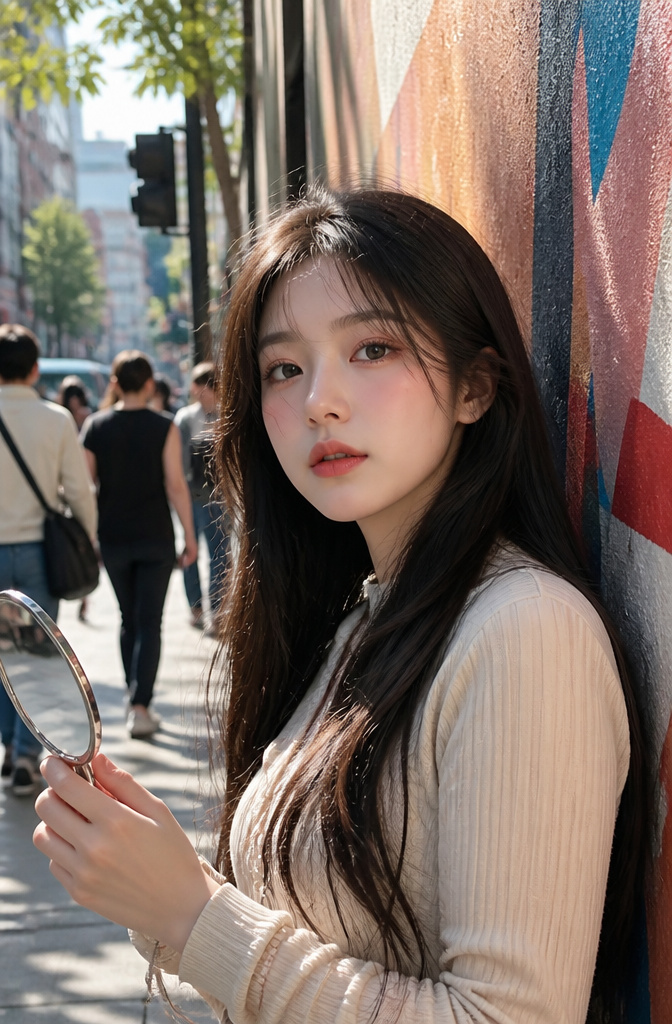
Douyin makeup lives or dies on the blur. The technique everyone notices first is the softened lip edge, where color floats inward from the lip line instead of stopping at it. What convinced me, watching hours of these tutorials, is that the effect reads as plush in real life only if you keep the blur zone narrow. Wider than a few millimeters and it looks like a smudge you didn’t catch before leaving the house.
The exaggerated under-eye blush placement sits lower than the standard Instagram placement, sweeping across the top of the cheek in a horizontal band rather than angling upward. On camera this shortens the face dramatically. Off-camera, under fluorescent bathroom light or grocery store overhead, the same placement can read as tired or irritated skin. The fix is keeping pigment density light and the color warm rather than cool, which lets the technique register as intentional rather than accidental.
The smaller-face emphasis relies on contour tucked tight against the hairline and jaw, plus bright center points on the inner cheeks and nose bridge. It works without ring lights if you step back from your mirror and check at arm’s length, where the contrast reads instead of disappearing into flatness. Skip the white dot on the nose tip, though. That flourish needs the specific front-facing phone angle to register as cute; straight on in person, it looks like leftover highlighter you forgot to blend.
12. Avant-Garde Makeup
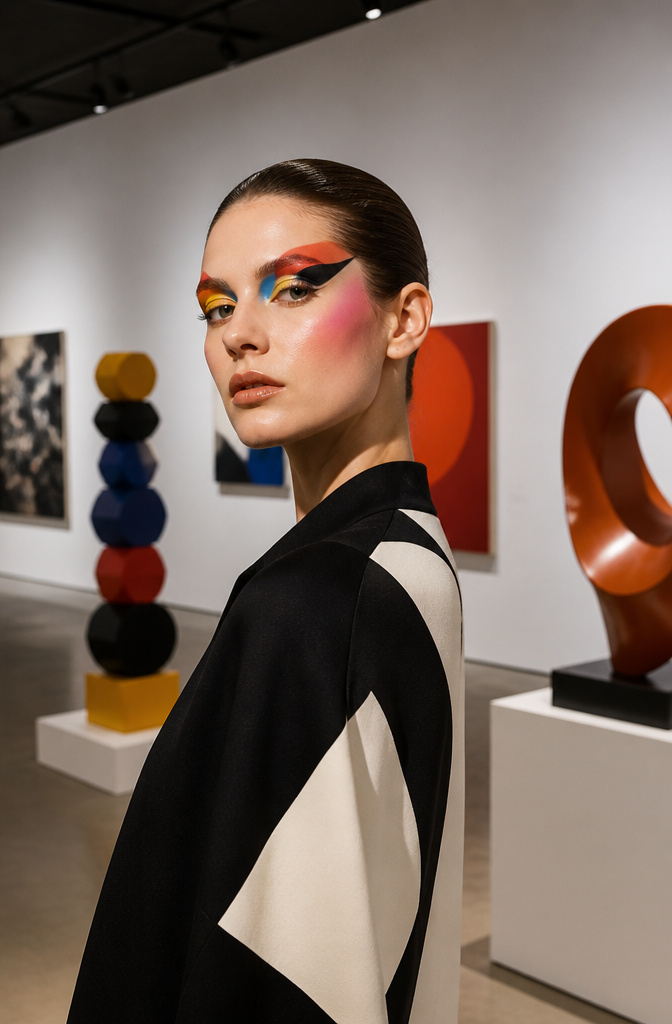
Avant-garde makeup sits at the edge of what most of us would actually wear. Bold colors, graphic eyeliner designs, and unconventional face embellishments all fit here, but the line between makeup and costume is where things get interesting. Graphic eyeliner that floats an inch above the crease reads as editorial; prosthetic horns and full face paint read as Halloween, and the distance between them is shorter than Instagram makes it look.
I have attempted the floating liner. I have not attempted the resin lip attachments or the bleached brow with hand-painted trompe l’oeil veins. Watching a makeup artist build sculptural cheekbones from wax and pigment on a model is fascinating from my couch and would be humiliating in my bathroom mirror at 7 a.m. The artistic statement matters more than whether you could sit through dinner in it, which is fine for a portfolio shot and impractical for a Tuesday.
What I will borrow from avant-garde is the permission to place color where no tutorial told me to. A stripe of white liner along the temple. A single gem at the outer corner instead of a full face of them. The repertoire is wide; the part you actually use is narrow, and knowing the difference saves time and product.
13. Instagram Baddie Makeup
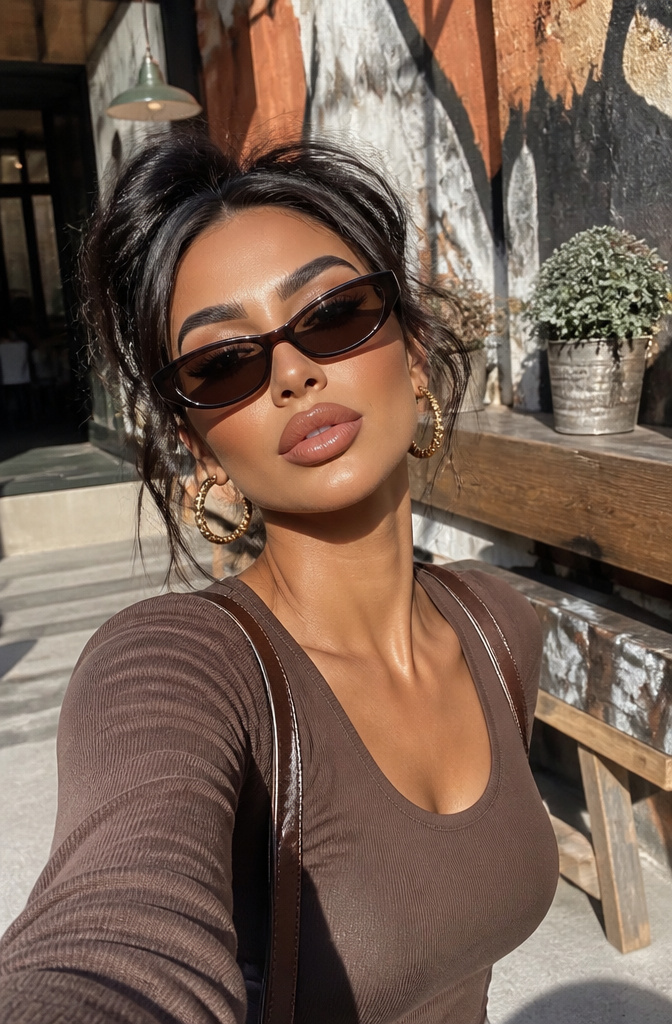
The Bratz baddie look lands heavy on the face: a carved contour that reads as shadow from ten feet away, lips drawn past their natural line with gloss piled on top, and full coverage everywhere else to match. Saweetie’s WONDERLAND cover is the reference point most people cite, and the sources get the description right. What they understate is how much of this survives a grocery store run at noon.
Overlined glossy lips in daylight look exactly like overlined glossy lips in daylight, not the plush, editorial blur you see on a screen. The contour behaves worse. Under office fluorescents or spring sun, the stripe along the cheekbone separates into two distinct temperatures: the warm undertone of your skin and the cool gray of the product sitting on top of it. I have walked into a 10 a.m. meeting with that visible seam and watched the person across the table try not to look at it.
The smokey eye and voluminous lashes are less risky in practice, if only because eye makeup fades more gracefully than foundation architecture. But the full package together, the way the sources describe it, is built for photography and evening light. For most people, as one source notes, it is not an everyday look. The distinction matters because the "baddie" label sells it as confidence rather than costume, and confidence at 7 a.m. should not require that much repair work by 2 p.m.
14. Smokey Eye Makeup
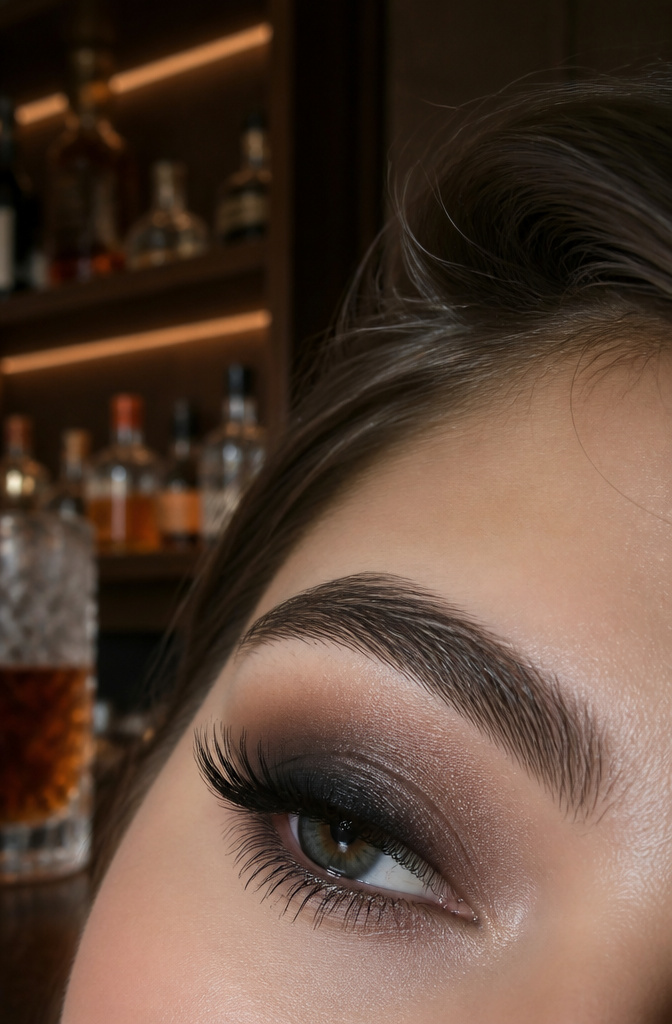
Black or gray eyeshadows blended outward from the lash line in graduated intensity is the core technique here, and it is a technique-first aesthetic rather than a color story. The classic execution starts darkest at the lash line and feathers lighter as it climbs toward the brow bone, which gives the eye its depth without closing it in. A kohl-rimmed liner along the waterline sharpens the shape, though I would smudge it slightly so the line does not read as a separate element sitting on top of the shadow.
Pure black can turn harsh on mature lids, where thinning skin and fine lines grab pigment unevenly. My preferred alternative is a deep charcoal or soft soot gray as the anchor shade, which keeps the drama but lets the blend read softer at the edges. A nude lip balances the look without competing, since the eye has already taken center stage.
15. Bold Red Makeup
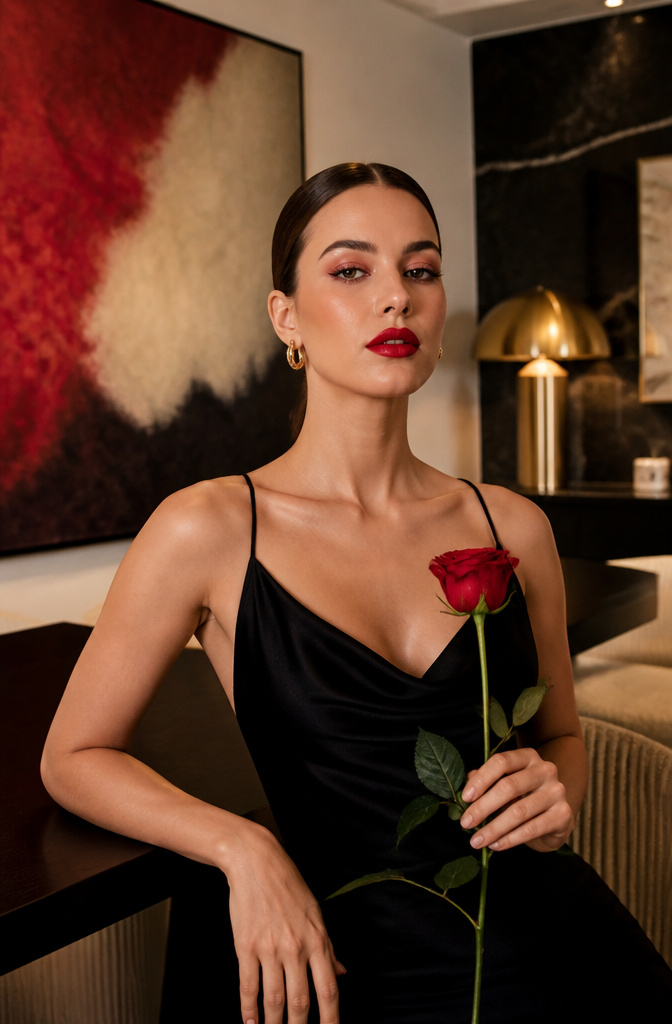
Red demands more from technique than most statement colors because the same bullet reads wildly different depending on what sits underneath it. On me, blue-based crimsons turn outright pink within two hours; orange-leaning scarlets go full traffic-cone; only true reds with neutral balance stay where they started. The undertone test is non-negotiable.
Patrick Ta’s method for keeping a red lip intact is worth the prep time: a thin nourishing mask on while the rest of the face comes together, then straight from the bullet for payoff that outlasts brush application. Nick Barose’s approach for eyes keeps red in small doses, a shimmery wash along the lower lash line against bronzy smoke, so the color reads as twist rather than costume. The smaller the red placement, the more pigment it can carry without tipping into theater.
A full-face red, lip and eye together, works only when the shades share a family, fiery crimson with crimson, deep burgundy with its match. Mismatch the undertones and the face splits in two.
Makeup Techniques That Carry Across Aesthetics
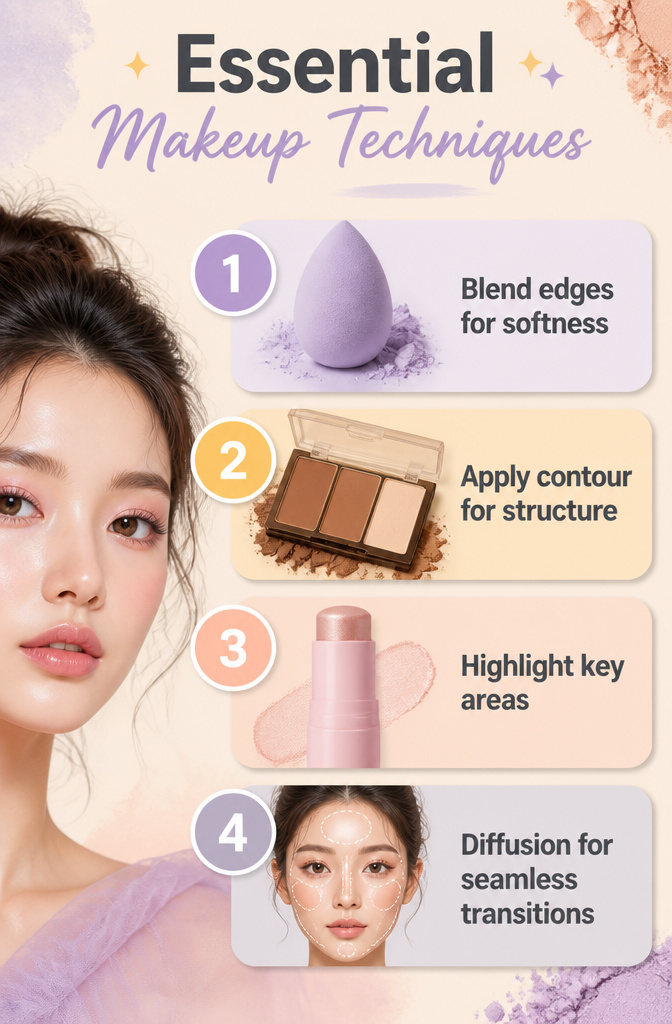
Blending was the only technique I trusted for my first two years of wearing makeup. I could diffuse any edge into softness, and that felt like enough until I tried a snatched contour and realized my cheekbones had no structure to blend into. The lifted effect I wanted never arrived, because contouring and highlighting were still foreign territory.
That changed when I started building dimension in layers: a subtle bronzer or contour powder at the cheekbones and jawline, a shimmerista powder at the nose tip and cupid’s bow, and everything diffused at the edges. Pastel looks need that grounded structure even more than natural ones do. The color reads as intentional rather than floating on a flat plane.
Now I think of the three skills as inseparable. Contouring gives the face architecture, highlighting brings the light forward, and blending is the connective tissue that keeps either one from announcing itself too loudly. One without the others limits every aesthetic in this list, from sunflower warmth to Douyin precision.
Products I Actually Buy
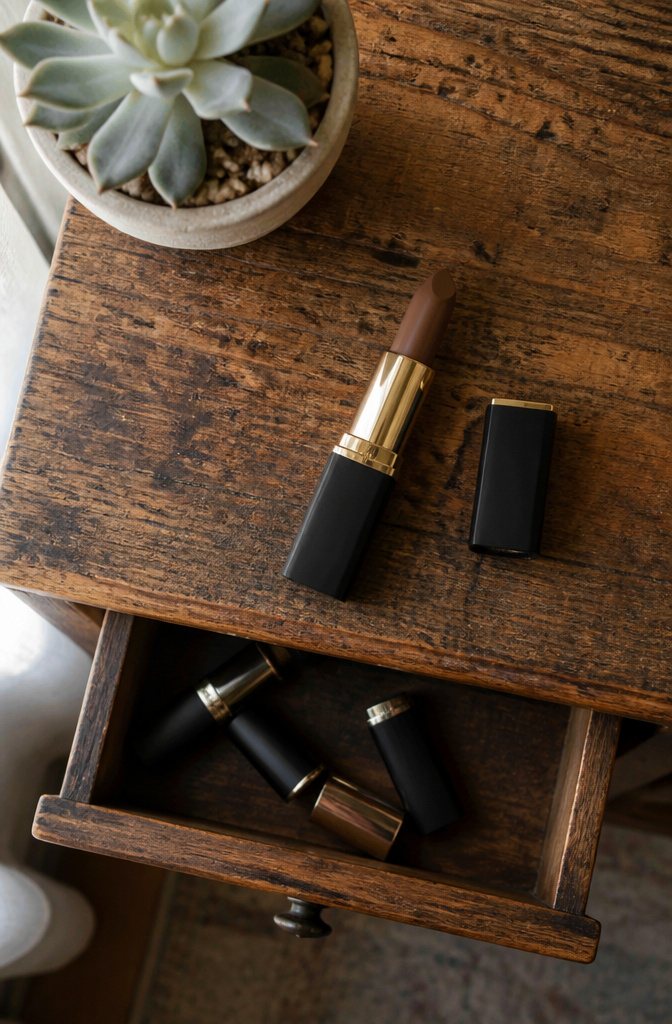
The L’Oréal Paris Colour Riche Ultra Matte Highly Pigmented Nude Lipstick in Cutting Edge Cork is the one I actually finish and buy again. It hits that ’90s grunge brown without reading costume-y, which matters when you’re building an aesthetic look on a real face going to real work. Two other Colour Riche shades sit in my drawer barely touched, not because they’re bad but because that particular depth of brown is harder to replicate across brands than the safer pinks.
For under $50 total, a budget-friendly soft glam routine is genuinely achievable with drugstore products. What separates the repurchases from the drawer-sitters tends to be whether the product bridges multiple aesthetics. A single brown lipstick that works for grunge one day and clean girl the next earns its spot; the specialized glitter palette bought for one TikTok trend usually does not.
How Trends Actually Reach Me
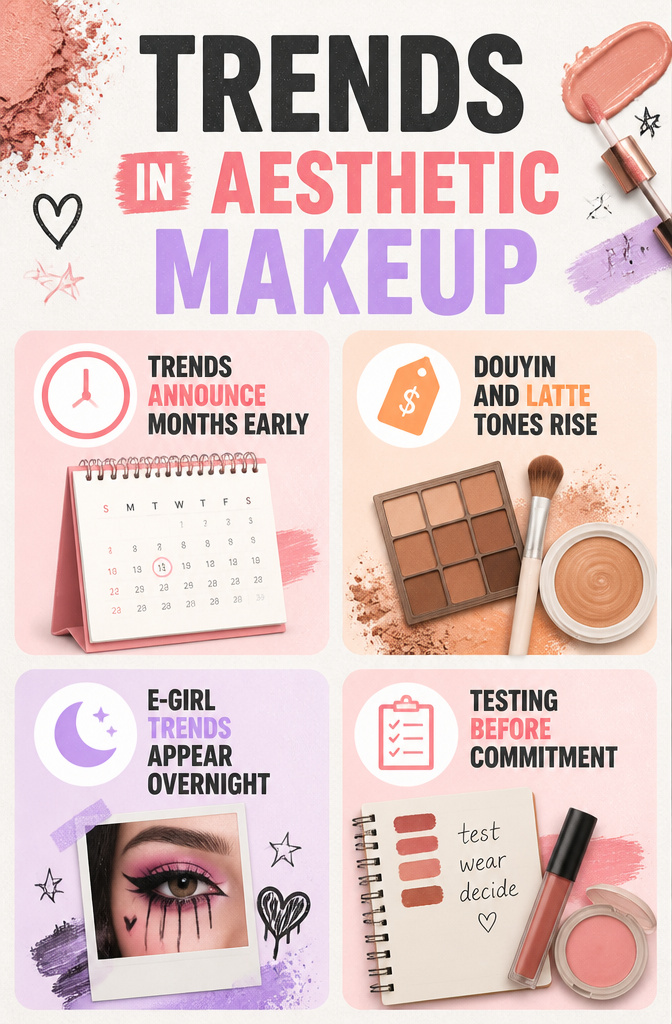
Some makeup shifts announce themselves months early. Douyin blur edges and latte-toned washes arrived with that kind of warning: tutorials stacked up, then Sephora rearranged its displays to match. Sunflower yellow and fairycore glitter moved the same way, giving me time to test whether the tones flattered my actual face before committing drawer space.
Other aesthetics land fully formed. E-girl stripes and grunge smudging seemed to appear overnight on every feed, the kind of trend that skips the runway entirely and starts with one account that hits some vein of teenage longing. By the time I noticed, the products were already restocked twice.
The fifteen looks in this guide fall across that whole span of arrival. Three I watched creep in over a year of browser tabs. Four I still think of as last spring’s surprise. The rest occupy the middle ground, the ones you adopt not because they shocked you but because they quietly became the standard, and suddenly your old palette looked dated against them. That timeline matters more than the list itself. Aesthetic makeup in 2026 is less a catalog than a season’s worth of arrivals, some still cresting and others already softening into background noise.
Frequently Asked Questions
What types of makeup looks are there?
Makeup looks run from barely-there natural styles to full architectural builds like Gothic or Instagram baddie. The article covers fifteen specific aesthetics for 2026, ranging from sunflower yellow and fairycore pastels to Douyin blur and avant-garde graphic liner. Most fall between those poles: soft glam, latte brown, vintage throwback, and e-girl all sit at different points on the intensity scale.
How do I know my makeup style?
Your makeup style lines up with what you will actually maintain, not just what photographs well. The article tests each aesthetic against real wear: fairycore gems shift under office lights, Douyin blush placement reads as tired skin without ring lights, and Instagram baddie contour separates into two temperatures by noon. Start with the looks that survive your actual day, then borrow elements from the ones that do not.
What is the most common type of makeup?
Natural makeup is the most common style, built from light foundation, soft eyeshadow, mascara, and nude or pink lipstick. The clean girl look is the 2026 baseline most other aesthetics build from: dewy skin, brushed-up brows, and minimal product. It works for daily wear and professional settings because it enhances without demanding constant repair.
How to choose a type of makeup?
Match the aesthetic to your undertone, your schedule, and the light you will actually stand in. Warm undertones carry peach and sunflower yellow better; cool undertones need brown transition shades to keep yellow intentional. Test brown shadows on your forearm, not your wrist, because undertone shifts enough between those two spots to change how the color reads. Consider whether the look survives without its full kit if you are getting ready at 7 a.m.